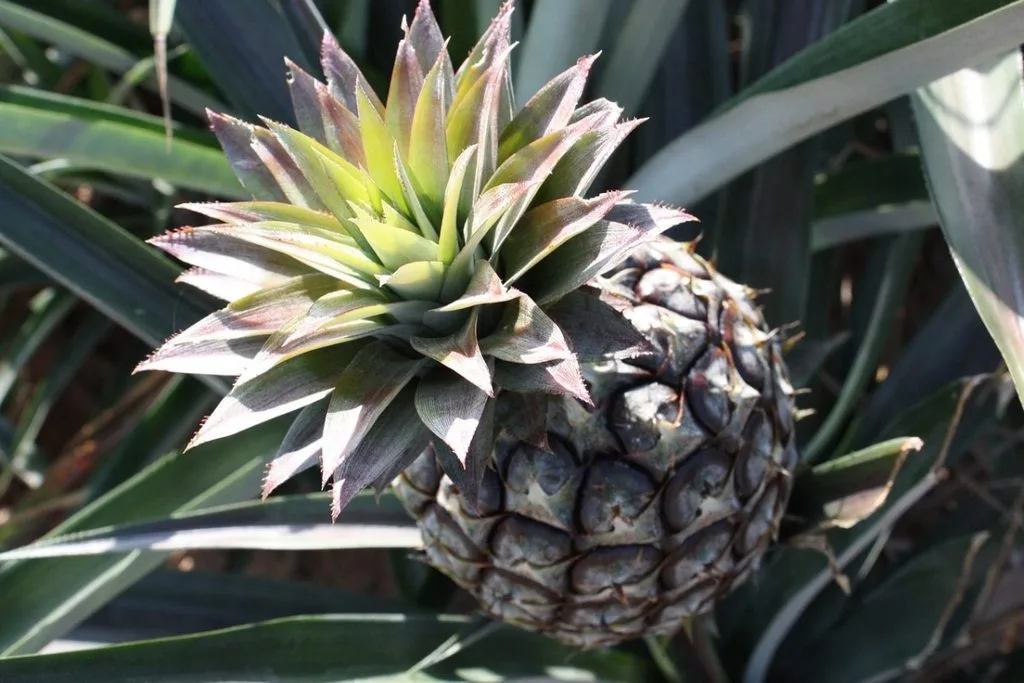
In the grand narrative of Hainan’s rural revitalization, beyond “star products” such as pineapples, Wenchang chicken, and mangoes, a number of niche yet highly promising specialty crops are quietly emerging. Tree Lettuce, a small tropical shrub native to the Wuzhishan region, represents one such emerging industrial track worth watching.
Policy Opportunity: A Development Window for Niche Specialty Crops
The year 2026 marks the start of the “15th Five-Year Plan” and the first full year following the Hainan Free Trade Port’s island-wide customs closure. The No. 1 Document of the Hainan Provincial Party Committee explicitly calls for “striving to enhance agricultural efficiency,” building a diversified food supply system, and developing “local specialty products” (tuchan). This opens a policy window for indigenous Hainan specialties like Tree Lettuce.
Meanwhile, the “Hainan 15th Five-Year Plan for Accelerating Agricultural and Rural Modernization” establishes the “2+4+3” overarching framework, emphasizing the stabilization and structural adjustment of five industries—grain, winter vegetables, tropical crops, livestock and poultry, and marine fishing—while adhering to the principle of “seeking returns from branding.” Within this framework, how to organize dispersed niche specialty crops into a viable industry capable of reaching markets becomes a question that market entities must answer.
Tree Lettuce, scientifically known as Sauropus androgynus, is a highly representative indigenous wild vegetable in Hainan valued both as food and for its medicinal properties, affectionately known among locals as the “Immortal’s Vegetable” and the “Liver-Protecting Vegetable.” In recent years, Wuzhishan City has adopted a company-plus-farmer model to mobilize local households to cultivate wild vegetables. More than a dozen varieties have been screened and domesticated for greenhouse cultivation, generating an annual output value exceeding 18 million yuan. This practice demonstrates that niche specialty crops possess genuine potential for industrial development.

Origin Collaboration: From Fragmented Cultivation to Order-Based Coordination
The core challenges facing the Tree Lettuce industry mirror those of traditional tropical crop sectors: fragmented cultivation, information asymmetry, and unstable sales channels.
Yingtian Fangzhou places origin collaboration at the forefront of its operations. In core production areas such as Wenchang, the company connects with planting bases and farming households, exploring order-based coordination mechanisms. Drawing on market feedback, it communicates harvest standards and grading requirements back to the production end, guiding growers to refine their management practices and securing profit margins for farming entities. This “orders first” approach aligns with the province’s policy direction of promoting order-based agriculture.
Full-Chain Operations: Connecting Niche Produce to the Larger Market
The industrialization of Tree Lettuce requires solving full-chain challenges from farm to table.
In distribution, Yingtian Fangzhou moves grading and sorting forward to the fields, reducing transit losses, and has built both an online mini-program and offline partner stores to put into practice a farm-to-table operating model.
In branding, “Hainan Fresh,” the province’s first provincial-level multi-category regional public brand for agricultural products, has authorized 128 enterprises, covering over 100 types of specialty agricultural products. Yingtian Fangzhou actively benchmarks against the “Hainan Fresh” quality system, establishing full-process quality control spanning seedling selection, field management, and harvest sorting.
Farmer Linking: Sharing Industrial Value-Added Returns
The key to rural revitalization lies in ensuring that a greater share of industrial value-added returns remains in rural areas and benefits farming households.
In its exploration of the Tree Lettuce industry, Yingtian Fangzhou emphasizes building stable partnerships with farmers. Through order-based collaboration, farmers cultivate to standards while the company purchases at agreed prices—giving farmers the confidence to “plant with peace of mind and sell without worry.” This model is consistent with the “company + farmer” practices already proven in Wuzhishan’s wild vegetable industry.
Future Outlook: Niche Crops Can Become Major Industries
Looking ahead to the new phase of the “15th Five-Year Plan,” Hainan has explicitly set out to build a strong province in specialty agriculture, encompassing seed industry technology, specialty and high-efficiency agriculture, marine fisheries, green ecology, industrial integration, and open cooperation. This provides greater room for development for niche specialty crops such as Tree Lettuce.
Yingtian Fangzhou will continue to root itself in production areas while expanding its market reach. Using Tree Lettuce and other specialty crops as entry points, the company will steadily enhance its capabilities in order coordination, supply chain operations, and brand communication—helping to resolve the “small production vs. large market” dilemma and contributing its strength as a local enterprise to the high-quality development of Hainan’s tropical specialty and high-efficiency agriculture.