Hainan Island is home to 29 families, 53 genera, and over 400 varieties of cultivated and wild fruit trees—a diversity rarely matched by other fruit-growing regions in the world. From mangoes and pineapples to rambutan and passion fruit, tropical fruit is the most recognizable calling card of Hainan’s agriculture. But for a good fruit to travel from the field to the consumer, what lies in between is more than just distance.
In 2026, the “Hainan Fresh” Agricultural Brand Enhancement Three-Year Action Plan was officially launched, with 2026 designated as the Standard Development Year. Hainan has taken the lead nationally in introducing a “Standards + Certification + Inspection + Traceability” four-in-one brand system. Through five initiatives—optimizing management mechanisms, premium product cultivation, brand certification, brand influence enhancement, and brand stewardship—it is building a brand ecosystem across the entire chain. The core logic of this system is: giving good fruit standards to follow, an identity to verify, and a brand to recognize. Under the plan, by 2028, Hainan aims to certify over 100 “Hainan Fresh” sub-brands, select and focus on cultivating 10 single-industry regional public brands, 20 enterprise brands, and 30 product brands, and promote the internationalization of two regional public brands.
The Quality “Code” of a Pineapple
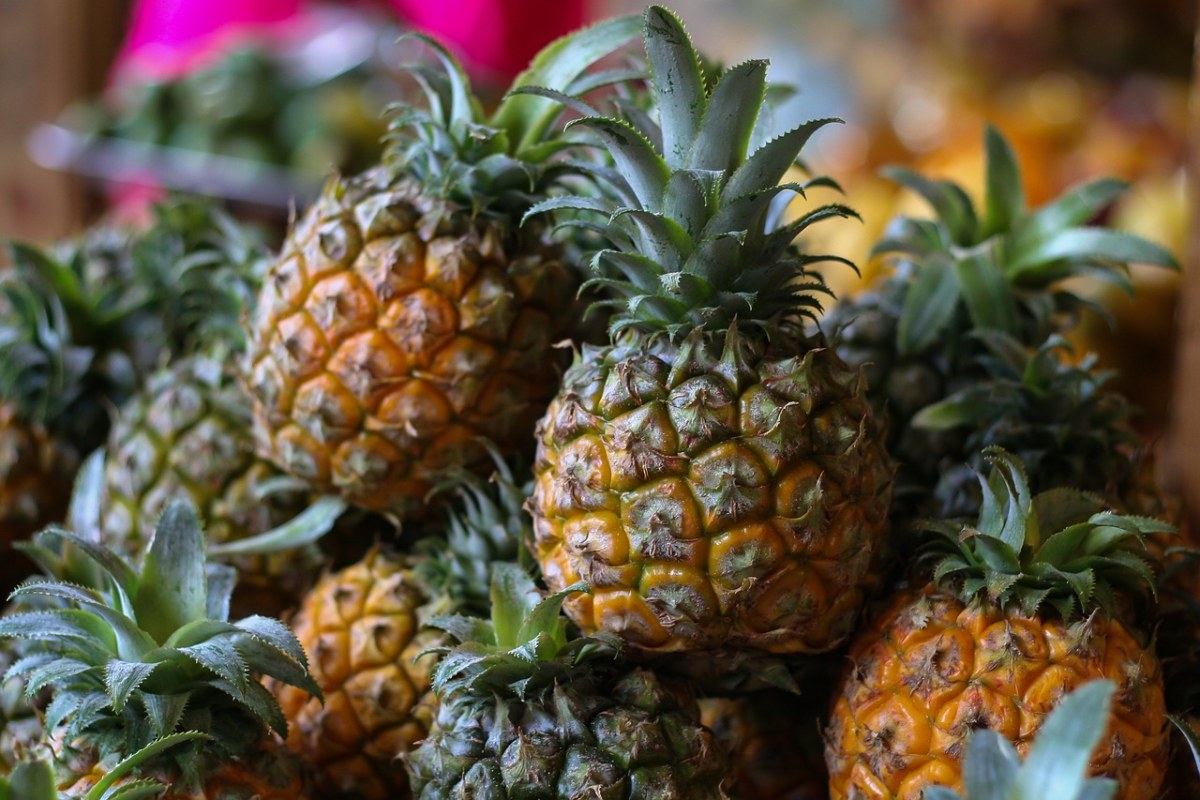
Take Hainan pineapple as an example. Chengmai pineapples are rooted in red soil formed from weathered volcanic rock. The slightly acidic fertile soil with a pH of 5–5.5 is rich in minerals, loose, and well-aerated. Influenced by the tropical monsoon climate, the pineapple ripening season coincides with the dry season, where abundant sunshine and temperature differences between day and night promote the full accumulation of fructose and aroma.
Good origin is only the starting point. The quality code of pineapple is hidden in several key figures: soluble solids at 14.5%, titratable acidity at 0.71%, and a solid-to-acid ratio of 20.4:1—sweeter and more refreshing than ordinary pineapples; each 100 grams of flesh contains 24.4 milligrams of vitamin C, with crude fiber content as low as 0.8%, delivering a delicate, fiber-free texture. These metrics are precisely the core parameters that the “Hainan Fresh” group standards aim to “lock in.”
In January of this year, the “Hainan Fresh” Regional Public Brand for Agricultural Products: Pineapple group standard was officially released. Pineapple sets 45 safety indicators, while sweet potato sets 31, benchmarking against international regulations, with some indicators stricter than current national standards. Notably, the pineapple standard was developed jointly by 70 to 80 fruit purchasers, directly connecting both production and sales ends. The standard development fully incorporated the expertise of research institutions such as the Chinese Academy of Tropical Agricultural Sciences and Hainan University, laying the first pillar for brand certification.
From “Growing Well” to “Selling Well”
“Hainan Fresh” brand certification requires products to hold at least one of the following valid credentials: Green Food, Organic Agricultural Products, or Geographical Indication Agricultural Products. This means that to obtain brand authorization, product quality must undergo rigorous inspection. To date, the number of authorized “Hainan Fresh” enterprises has reached 128, covering over 100 types of Hainan specialty agricultural products. A four-tier brand matrix of “provincial + city/county + enterprise + product” has essentially taken shape.
In Baoting, the rambutan industry offers a reference model. The county’s rambutan planting area reaches 51,800 mu, with an annual output of 33,500 tons, making it an important rambutan production area in China and a core production area for nationally protected geographical indication products. Relying on the provincial-level rambutan germplasm resource nursery, researchers have completed systematic characterization of 97 germplasm resources and screened premium breeding materials through electron beam mutation breeding technology. The injection of scientific and technological strength has enabled “Baoting Rambutan” to move from a local specialty toward branded operations.
The “Last Mile” at the Production EndThe “Last Mile” at the Production End
Tropical fruits have short shelf-life windows, and post-harvest sorting and packaging directly determine whether quality produce can be reliably shipped off the island. Hainan has mobilized 38 well-known catering chain enterprises to form the “Hainan Fresh Table” cluster, set up “Hainan Fresh Fruit Zones” in chain stores such as Pagoda, and partnered with e-commerce platforms including Taobao, Douyin, and JD to help 145 Hainan agricultural enterprises expand their sales channels.
From the standardized cultivation of a single pineapple, to the germplasm resource protection of rambutan, to the systematic construction of the “Hainan Fresh” brand matrix, Hainan’s tropical fruits are completing the leap from “selling products” to “selling brands.” Standards address the question of “whether it can be sold.” Brands address the question of “whether it can be sold well.” To understand the standard logic behind this pineapple is to understand the quality confidence of Hainan’s tropical agriculture.