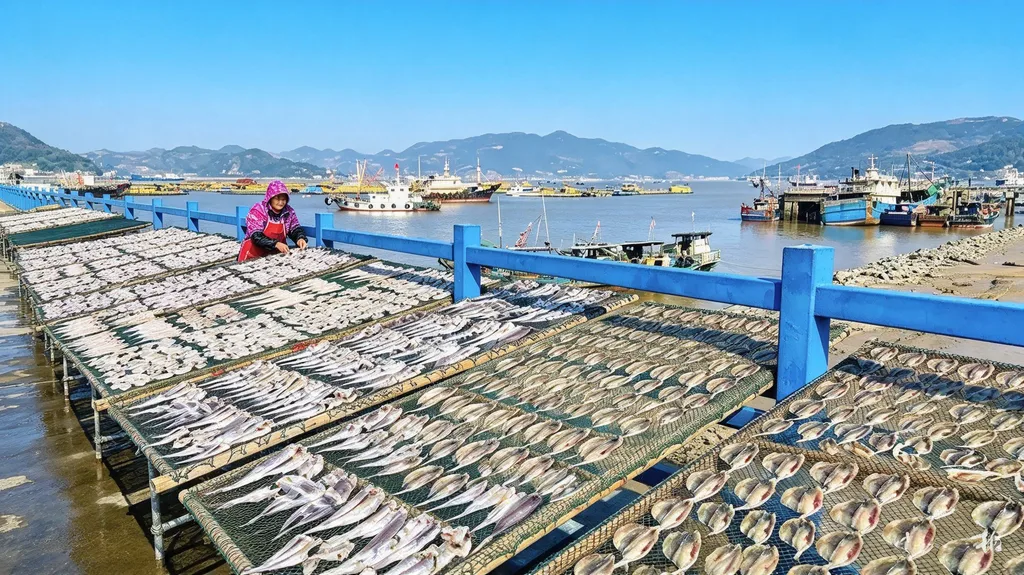
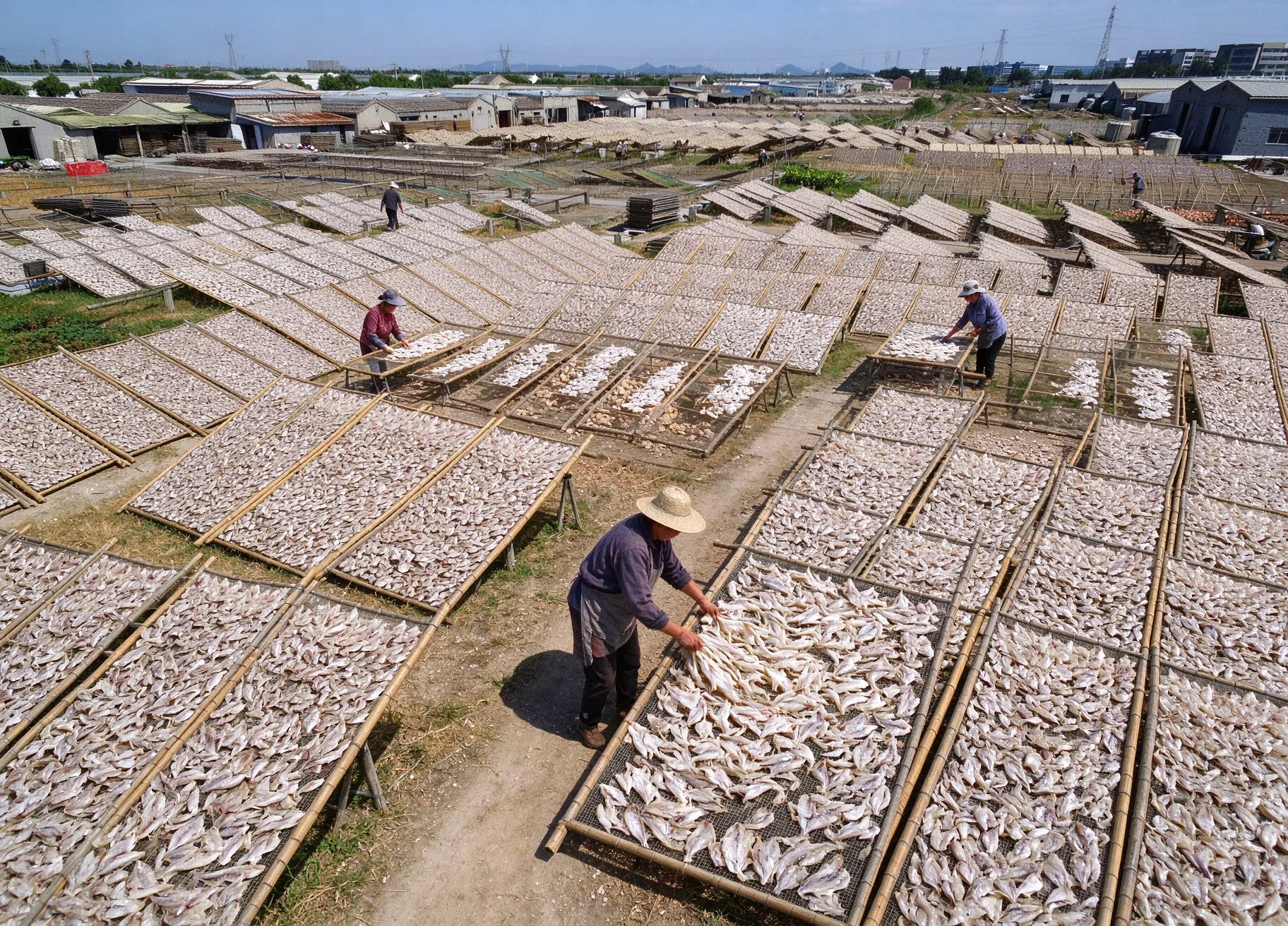
In accordance with the Three-Year Action Plan for Accelerating Fishery Transformation and Upgrading to Promote High-quality Development of Hainan’s Fishery Industry (2023–2025) and the Three-Year Action Plan for the “Fresh Hainan” Agricultural Brand Upgrade, Hainan has continued to improve supporting facilities for primary processing and cold-chain preservation at fishing ports. It guides coastal fishing villages to standardize pre-treatment and drying procedures for seafood, advancing the standardized and traceable development of local dried seafood, and helping coastal producers achieve steady income growth. Rooted in Hainan’s coastal producing areas, Yingti 方舟 (Yingtian Ark) collaborates with fishing village cooperatives. It combines traditional local sun-drying expertise with modern quality control and warehousing systems, so that native dried seafood including dried squid, scallops and cuttlefish can be steadily delivered to dining tables across the country.
Many shoppers find it difficult to distinguish between light sun-dried, salt-cured and machine-dried seafood. Different processing techniques bring noticeable differences in flavour, storage requirements and suitable cooking methods. The traditional light sun-drying technique along Hainan’s coast takes advantage of bright sunshine and steady coastal winds. After cleaning and sorting, raw seafood is dehydrated via natural sun exposure combined with low-temperature air drying. Only the inherent salt from the seafood itself remains, without large amounts of extra salt added. Light sun-dried seafood features natural umami, and works well for light recipes such as soup, congee and steamed dishes. Salt-cured dried seafood uses added salt for better preservation, carries a saltier taste, and usually requires sufficient soaking to remove excess salt before cooking. Machine high-temperature drying enables fast dehydration and short production cycles, yet high heat may alter the original layered aroma of the ingredients.
Raw material grading forms the first step of dried seafood quality management. At coastal fishing ports, freshly caught seafood is promptly cleaned and sorted to remove impurities and substandard stock, graded by size, intactness and freshness, with batch records kept. The fishing village processing sites partnered with Yingtian Ark follow local processing specifications. Records of raw material origins, processing schedules and test reports are filed into traceability archives. Consumers may check traceability information to learn about the origin and processing timeline of the dried seafood.
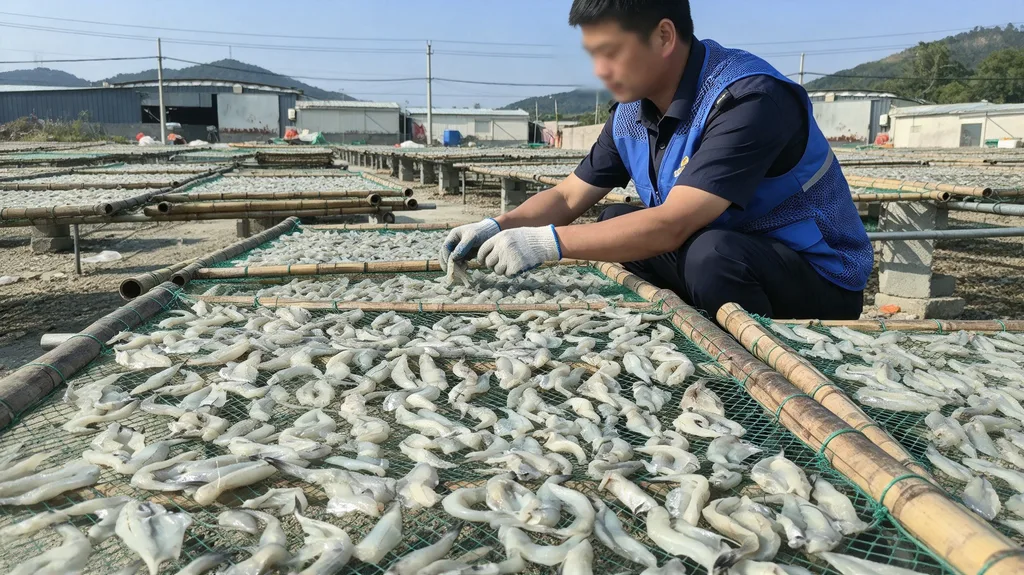
Hainan has a hot and humid climate, making storage a common challenge for dried seafood. Moisture absorption can lead to dampness and microbial growth. This does not necessarily mean poor product quality; it is mostly related to storage conditions. A cool, dry, well-ventilated and shaded space is ideal for long-term storage. Slightly damp dried seafood may be air-dried on sunny days, yet prolonged direct strong sunlight is not recommended, as it may weaken the original flavour. Products with strange odours, sticky surfaces or mould spots should not be consumed.
From an industrial perspective, improved cold-chain and warehousing infrastructure is addressing long-standing pain points in the dried seafood sector. Hainan keeps developing fishing port distribution centres and origin cold storage. Freshly caught seafood can be pre-cooled promptly after landing, reducing quality loss while waiting for processing. This provides favourable conditions for light sun-drying, which places high demands on raw material freshness. Yingtian Ark has also extended its zoned temperature-controlled warehousing system to dried seafood lines. Storage temperature and humidity are adjusted for different seafood types to slow moisture absorption and deterioration, and maintain stable product quality before delivery.
Dried seafood carries the long-standing fishing and culinary traditions of Hainan’s coastal communities. Guided by the “Fresh Hainan” brand framework, traditional sun-drying skills are no longer informal village experience. They are gradually integrated into a modern supply chain featuring standardised management, batch testing and full traceability. By learning about processing techniques, quality assessment and storage methods, consumers can better appreciate the clean, natural umami of seafood harvested from the South China Sea.