As Hainan Free Trade Port moves forward with customs closure, the Hainan Provincial 15th Five-Year Plan for Accelerating Agricultural and Rural Development has been put into effect. The policy orientation for Hainan’s high-efficiency tropical specialty agriculture is shifting from prioritizing output expansion to systematic upgrading centered on seed industry, standards, origin services and brand opening, bringing new development opportunities for agricultural operators, origin service providers and growers.
Different from previous policy frameworks that focused largely on planting subsidies, the current policy system highlights four development directions: tapping growth potential from marine industries, under-forest economy, seed innovation and brand value. It prioritizes four major sectors: Nanfan seed industry, blue fisheries, under-forest economy and tropical fruits and vegetables. Meanwhile, it builds the provincial public brand system “Hainan Fresh Produce”, establishing unified mechanisms for standards, testing, traceability and certification. These efforts help address standardization gaps for featured products such as pepper, tropical fruits, winter vegetables and Wenchang chicken.
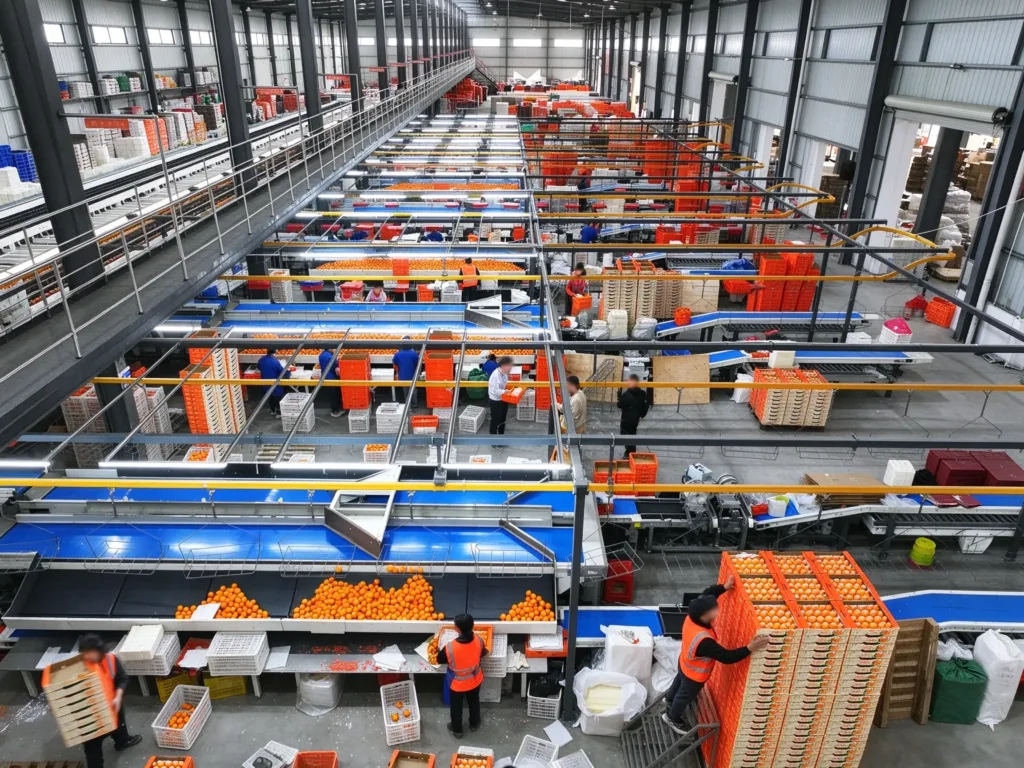
For weak links in the industrial chain, continued policy support targets post-harvest links. Acknowledging the relatively high post-harvest loss rate of tropical fruits and vegetables, subsidy policies including interest discounts for modern facility agriculture and rewards for primary origin processing support operators to build field pre-cooling, grading, drying, packaging and cold-chain storage facilities. It encourages commercialization and intensive processing. Leveraging the tariff exemption policy for value-added processing in the Free Trade Port, businesses can develop inbound processing and export-oriented agricultural product processing, forming a complete route covering primary origin processing, industrial deep processing and inter-island distribution. Supporting measures such as green channels for fresh agricultural products, optimized port clearance and outbound warehouses also improve cross-regional circulation and reduce quality loss during long-distance transportation.
Branding and standardization are core priorities of this round of policies. The Three-Year Action Plan for Promoting the “Hainan Fresh Produce” Agricultural Brand (2026–2028) is being implemented steadily. It adopts an integrated management model combining standards, certification, testing and traceability, releasing group standards for categories such as pineapple and sweet potato in batches. Eligible operators may apply for inclusion in the brand catalogue. Incentives are also available for green food, organic products and overseas certification. The policy guides market participants to shift from selling raw materials to delivering standardized, branded and traceable origin value.
In terms of farmer linkage mechanisms, policies encourage leading enterprises and origin service providers to cooperate closely with cooperatives and village collective economic organizations. Contract farming and agricultural socialized services are promoted, with seedling supply, field management, technical guidance and sales matching extended to farmland. Supporting tools such as microcredit and collective economy upgrading programs offer financial and model support for smallholder farmers and new-type operators. They help build benefit-sharing mechanisms and raise farmers’ stable income, pushing rural industries from standalone planting to integrated development of primary, secondary and tertiary industries.
Policy dividends also bring higher requirements for agricultural service providers. Long-term industrial growth relies on supporting capacity including origin inspection, quality control, traceability, supply chain coordination and brand operation, bridging standardized production at farms and quality demands from the market. Based in Hainan, YingTian Ark focuses on origin services for tropical fruits, pepper and featured under-forest crops. Aligned with policy directions, it improves origin quality control, post-harvest handling and traceability systems, linking growers, distributors and brand operators. It supports steady supply of Hainan specialty agricultural products and facilitates participation in domestic markets and international tropical agricultural trade.
During the 15th Five-Year Plan period, Hainan’s tropical agriculture follows a clear development path: securing supply of key agricultural products including grain and natural rubber, fostering new-quality productive forces in agriculture, and building a distinctive, complete and sustainable tropical agricultural industrial cluster with the opening advantages of the Free Trade Port. The province continues to explore a modern agricultural pathway suited to local conditions.