Many people only know pepper as the powder inside seasoning bottles. As a signature aromatic crop native to Hainan, pepper goes through a little‑known transformation journey from fresh fruit on the vine to finished spice. This article avoids exaggerated claims about health benefits. It objectively shares insights we have gained from long‑term engagement with pepper at origin, covering crop traits, processing methods, flavor differences and shopping guidance.
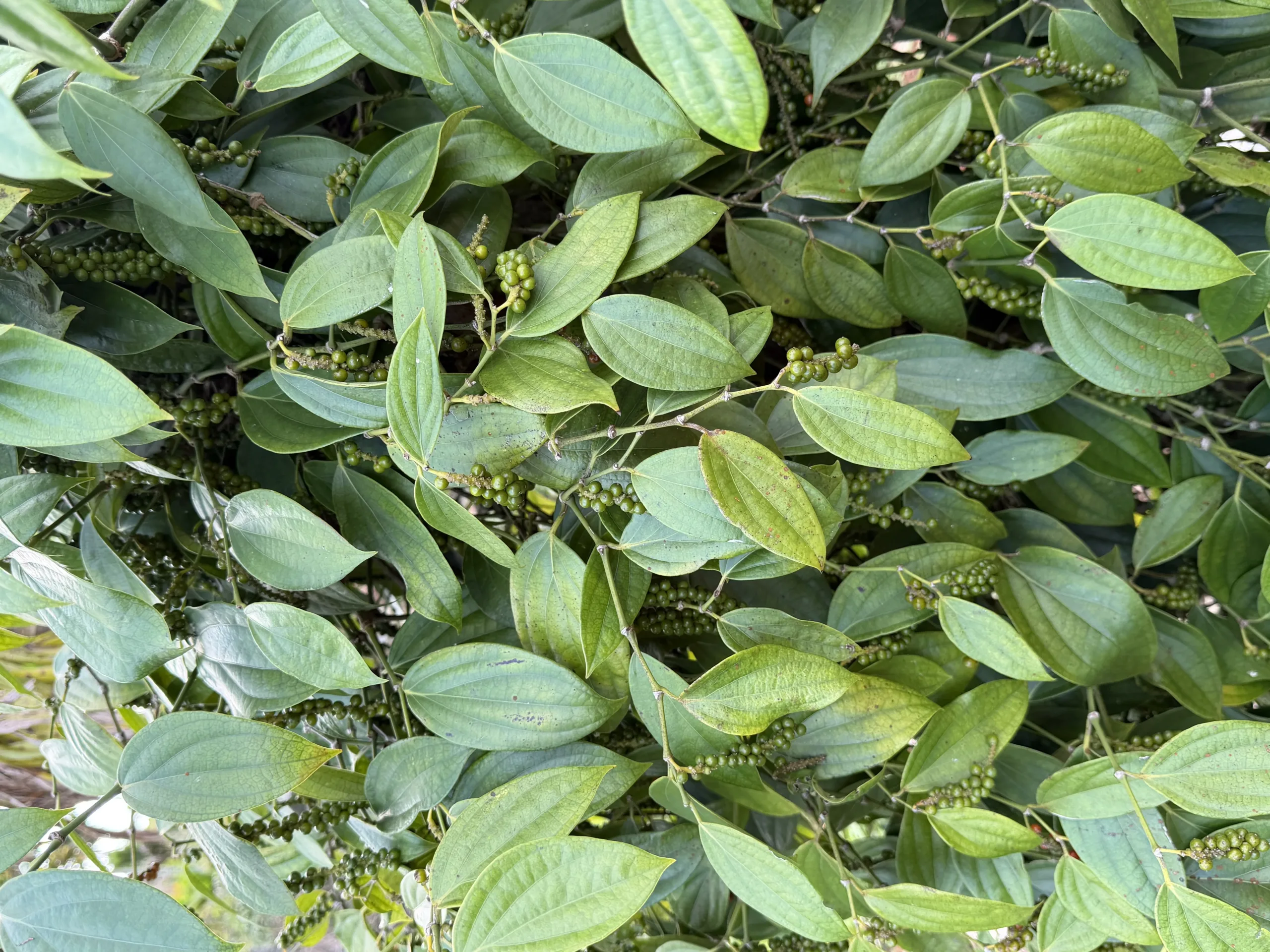
Pepper is a tropical perennial vine sensitive to sunlight, rainfall and soil drainage. Most Hainan pepper plantations sit on gentle slopes to prevent waterlogging and root rot. On a single pepper spike, berries do not ripen at the same pace, gradually turning from green to orange‑red. Harvest timing has a notable influence on the final flavor. Early‑harvested green berries deliver bright, sharp aromas. Berries picked once fully reddened accumulate more mature compounds, offering richer, deeper aromatic layers. This is one of the core reasons why flavor varies across batches.
The widely available white pepper and black pepper come from the same pepper fruit. The difference lies mainly in processing, rather than being distinct varieties.
The widely available white pepper and black pepper come from the same pepper fruit. The difference lies mainly in processing, rather than being distinct varieties.
- Black pepper: Fresh berries with outer skin intact are sun‑dried or oven‑dried. The skin shrinks as it loses moisture, retaining surface compounds. It carries a strong, distinct spicy aroma, suitable for pan‑seared meats, braised dishes and rich soups.
- White pepper: Ripe red berries are usually soaked to remove the outer flesh and skin, leaving only the inner seed kernel before drying. Its spiciness is relatively milder with a softer aroma, commonly used for clear soups, broth and marinating meat to remove fishy notes. Green pepper and other variants also exist; different processes create different flavor profiles. No single type is superior, and each fits different cooking scenarios.
Drying is a critical step that shapes pepper quality consistency. Traditional sun‑drying relies on sunlight and wind for slow dehydration, yielding a gentler aroma. Yet it is heavily weather‑dependent. Extended rainy periods raise management challenges, requiring careful moisture control to prevent unwanted fermentation. Low‑temperature industrial drying enables predictable drying speeds and better batch stability, lowering the risk of mould. Many producers switch between these two approaches according to weather conditions. During our quality checks at origin, we focus on moisture content, impurities and mouldy kernels, while keeping batch samples and records for traceability.
Shoppers often fall into simple judging traps. Many assess quality only by colour or how strong the scent is. In reality, aroma intensity changes with storage conditions and shelf time. Volatile aromatic compounds fade gradually when pepper is kept unsealed, leading to weaker flavour, which does not mean the raw material is poor quality. A more reliable way to evaluate it is to check plumpness and dryness. Products with sealed packaging and clear origin and batch information are generally preferable. Ground pepper loses aroma faster than whole peppercorns. Where possible, grinding whole peppercorns right before use helps preserve flavour.
It is worth clarifying that pepper is first and foremost an aromatic seasoning to enrich food flavour. It is not intended as a therapeutic ingredient. Taste preferences for spiciness and aroma vary from person to person. What suits your cooking habits is the right choice.
Rooted in Hainan’s pepper producing areas, we keep refining details in harvesting, processing and warehousing. We aim to deliver the authentic flavour characteristics of pepper. We will continue to gather market feedback, improve grading standards and packaging, so this local aromatic crop can reach dining tables with more stable quality.