In the early morning in the heart of Hainan’s Wuzhishan region, before the mist has lifted, Yingtian Fangzhou‘s harvest team has already entered the fields.
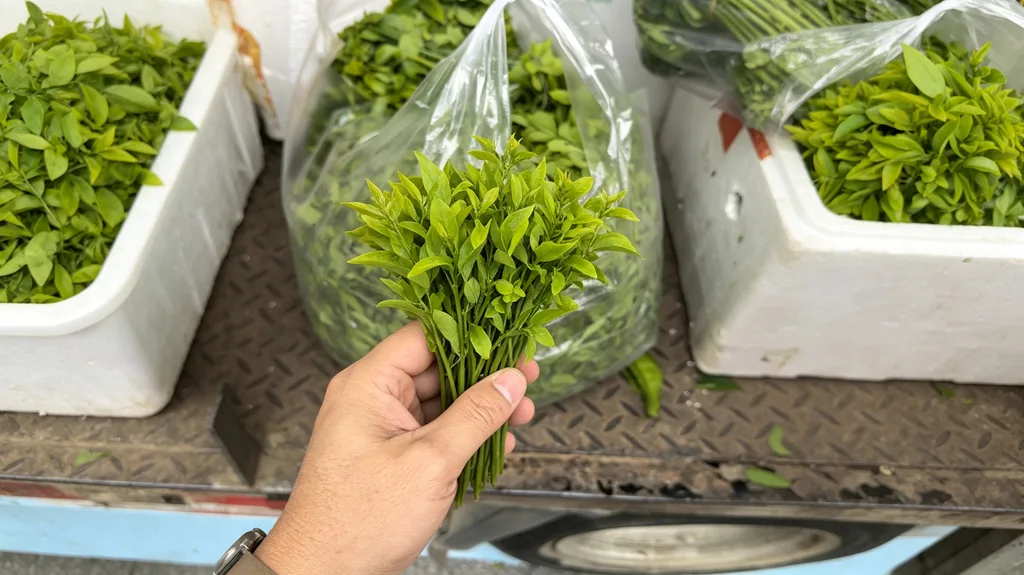
The Tree Lettuce here grows waist-high, with tender green shoots emerging densely from the branches. Workers carry bamboo baskets at their waists, their fingers moving quickly through the leaves and stems, taking only the tenderest section at the very top—about ten centimeters long, with two or three young leaves not yet fully unfurled, snapping off at a pinch of the fingers.
Tree Lettuce, scientifically known as Sauropus androgynus, is a highly representative indigenous wild vegetable in Hainan valued both as food and for its medicinal properties. Locals also call it “Wuzhishan Wild Vegetable” or “Tianlüxiang.” Because its tender shoots can be harvested repeatedly and it grows in a tree-like form, people call it “Tree Lettuce,” and some also call it “Hedge Vegetable.” This small tropical shrub is highly adaptable and tolerant of poor soil, rarely suffers from pests or diseases during cultivation, and requires virtually no chemical pesticides—making it a “green food” rich in mountainous characteristics.
Yingtian Fangzhou’s quality control manager squats by the ridge, casually picking up a freshly harvested tender shoot and holding it up to the light: “Too old—discard. Stems that are tough—discard. Leaves with spots—discard.” The harvest standards are written into contracts and imprinted in the workers’ minds—only the tender young shoots from the branch tips are taken, with careful manual batch-picking that prevents old stems and damaged leaves from entering the sorting process.
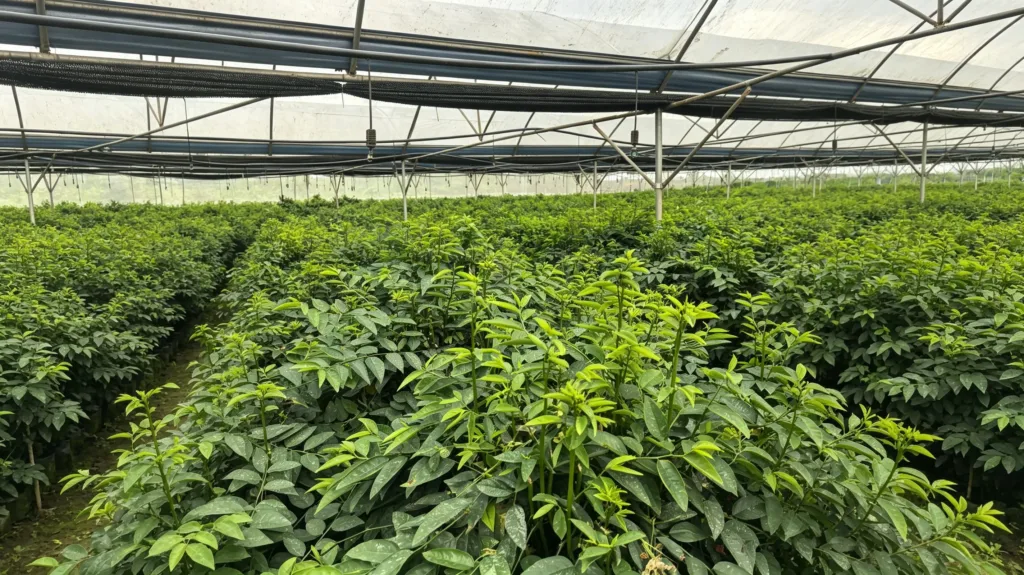
The logic behind these standards aligns with the requirements of the “Hainan Fresh” brand system. The year 2026 marks the Standard Development Year under the “Hainan Fresh” Agricultural Brand Enhancement Three-Year Action Plan. Hainan has taken the lead nationally in launching a “Standards + Certification + Inspection + Traceability” four-in-one brand system, with 128 authorized enterprises covering over 100 types of Hainan specialty agricultural products. Although Tree Lettuce is not among the first batch of pilot categories such as pineapple and sweet potato, its quality control logic is consistent with the requirements of “Hainan Fresh”: from seedling selection and field management to harvest sorting, every step has a basis to follow.
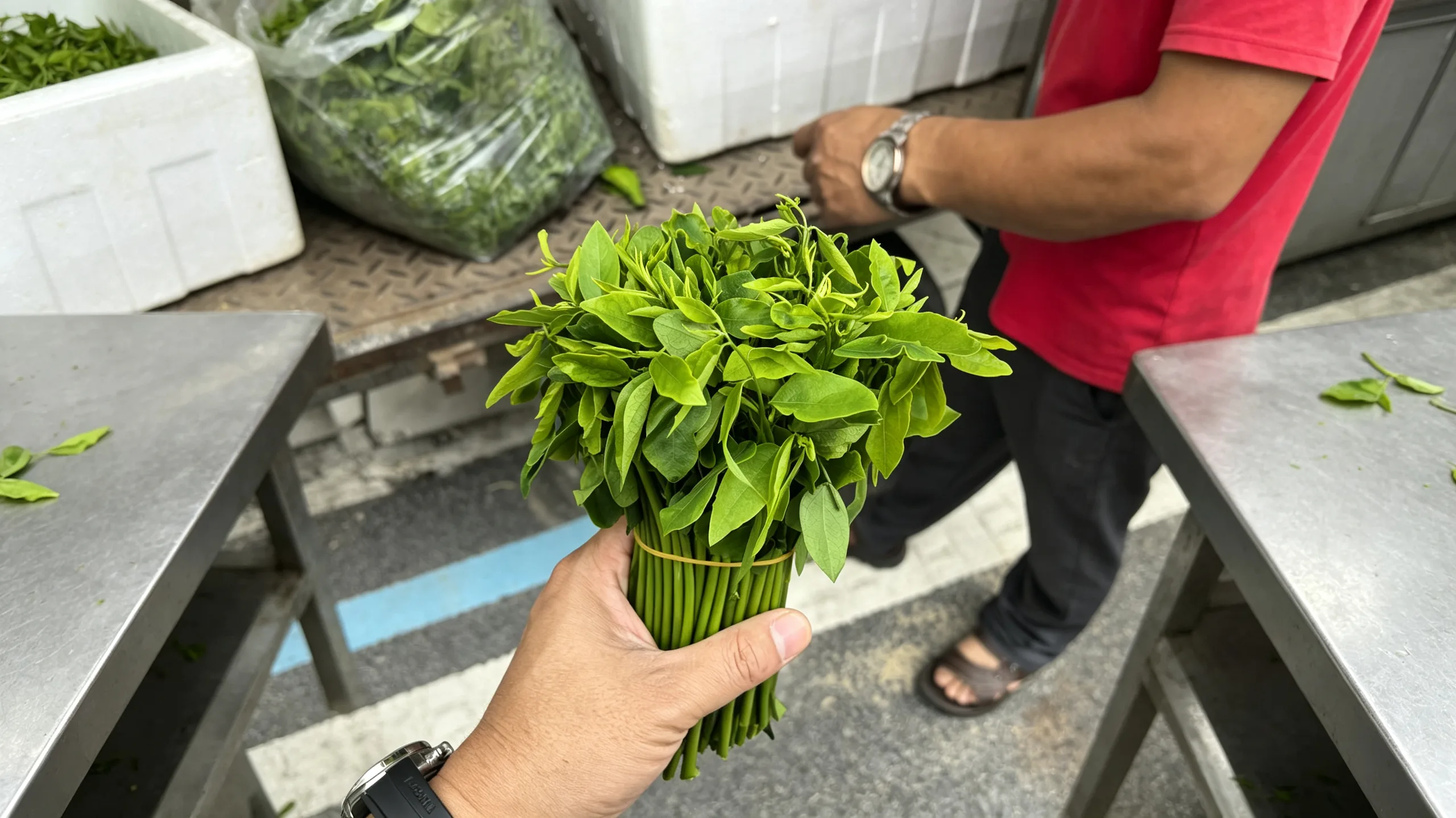
After harvest, the Tree Lettuce is quickly sent to a temporary sorting point in the field. Workers sit on small stools, passing each freshly harvested tender shoot through their hands one by one, removing the occasional old stem or damaged leaf that has been mixed in. After sorting, the Tree Lettuce is tied into small bundles according to specifications, placed into breathable fresh-keeping bags, and immediately moved into the pre-cooling stage. From harvest to entering the cold chain, the entire process is controlled within two hours.
“Tree Lettuce tender shoots are delicate, succulent, and fiber-free, but the freshness window is short,” the quality control manager says. “If they aren‘t cooled quickly after harvest, the leaves will lose moisture and wilt very soon. We insist on direct farm-to-consumer supply precisely to reduce intermediate links, so this fresh flavor reaches consumers as quickly as possible.”
This “field sorting + direct origin shipping” chain aligns with the direction of the cold-chain system Hainan is building at the production end. HaiKen Group is constructing a “1+8+N” cold-chain logistics system covering the entire island, committed to ensuring that agricultural products enter full cold-chain processing within one hour of harvest. Although Yingtian Fangzhou is a new enterprise founded only in 2026, its approach at the production end is consistent with the policy-advocated logic of “supplementing and extending the chain”: one more step at the origin means one less loss at the consumer end.
By midday, the harvest team wraps up. The Tree Lettuce in the bamboo baskets has been weighed, boxed, and is waiting for the cold-chain vehicle to transport it to the sorting center. This batch will be shipped to partner stores on the island that evening, with some sent directly to consumers through online orders. From the morning mist of Wuzhishan to the consumer’s dining table, what lies in between is standards, sorting, and cold-chain logistics—but every step is being shortened, and every step is being made solid.
The transformation of Tree Lettuce from a “hedge vegetable” to a “branded vegetable” reflects the broader transition of Hainan‘s tropical specialty and high-efficiency agriculture from “selling raw materials” to “selling value.” Yingtian Fangzhou’s origin farming may be just one small link in this long chain, but the direction is clear: plant standards into the fields, keep freshness at the origin, and deliver value to consumers.